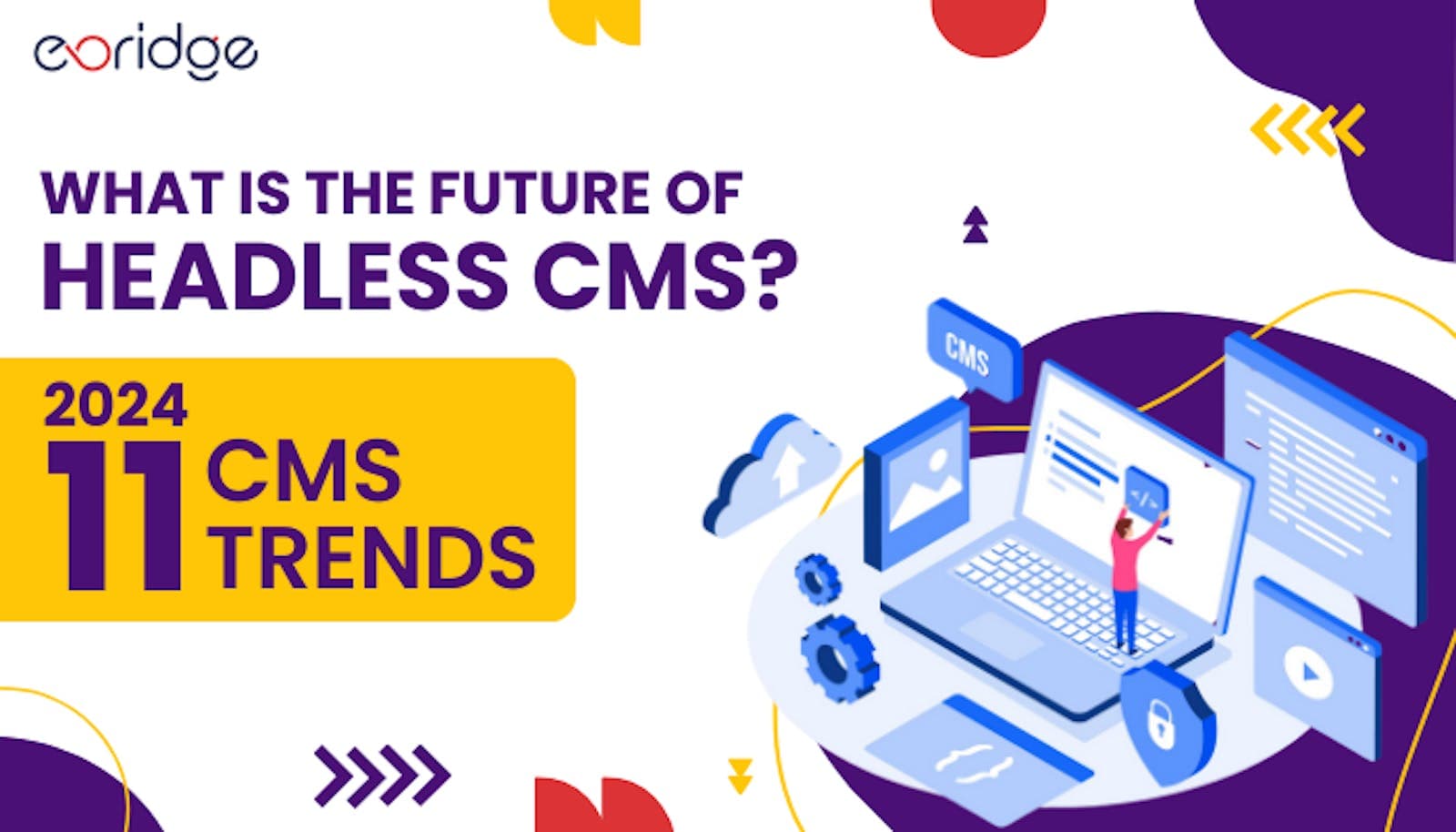
What Is the Future of Headless CMS? 11 CMS Trends In 2024?

Zarnish Khan
Dec 11, 2023 · 5 min read
As the digital landscape continues to evolve at a rapid pace, content management systems (CMS) are undergoing a transformation to meet the demands of modern web development.
One of the most notable trends on the horizon is the rise of headless CMS. In this blog, we'll delve into what headless CMS is, its advantages, and why it is considered the future of content management.
Why The Shift Towards Headless CMS?
In a headless CMS, content is created and stored without a predetermined structure for presentation.
This content is then made available through APIs (Application Programming Interfaces), leaving developers free to use any technology or framework to display the content on various platforms, from websites to mobile apps and beyond.
Read more: What Is Headless CMS—Why Is It So Popular?
Flexibility and Adaptability
Headless CMS allows developers to choose the best technologies for their projects. Whether it's a React, Angular, or Vue.js frontend or even emerging technologies like virtual reality or voice interfaces, the content can be seamlessly integrated.
Improved Performance
With the separation of the backend and frontend, headless CMS reduces the load on servers, leading to faster and more efficient websites or applications. This is especially crucial in today's fast-paced digital environment where users demand instant access to information.
Multi-channel Content Delivery
Headless CMS excels in delivering content across various channels and devices. Whether it's a website, mobile app, smartwatch, or IoT device, the same content can be repurposed and delivered consistently, enhancing the user experience across different touchpoints.
Easier Collaboration
Content creators and developers can work more independently with a headless CMS. Content creators focus on creating and managing content, while developers can concentrate on building engaging user interfaces.
This separation of concerns streamlines the development process and promotes collaboration between teams.
Future-Proofing
As technology advances, new devices and platforms emerge. Headless CMS provides a future-proof solution by allowing organizations to adapt quickly to changes in technology and consumer behavior without overhauling their entire content management infrastructure.
11 Popular CMS Trends In 2024
As we approach 2024, several trends are shaping the evolution of CMS, influencing how organizations create, manage, and deliver content.
- Headless CMS Dominance
The momentum of headless CMS shows no signs of slowing down. The decoupling of the backend and frontend allows for unparalleled flexibility, enabling developers to create seamless, omnichannel experiences across various platforms and devices.
- Rise of Low-Code and No-Code CMS
Empowering non-technical users to create and manage content, low-code and no-code CMS platforms are gaining popularity. These solutions enable faster development cycles, reduce reliance on IT teams, and democratize content creation.
- AI-Powered Personalization
AI-driven personalization is becoming a standard feature in CMS platforms. By analyzing user behavior, AI algorithms can dynamically tailor content to individual preferences, enhancing user engagement and satisfaction.
- Voice Search Optimization
With the increasing prevalence of voice-activated devices, CMS platforms are integrating voice search optimization features. This trend acknowledges the growing importance of optimizing content for voice-based queries.
- Blockchain for Content Security
As data security concerns persist, blockchain technology is making inroads into CMS. Blockchain ensures the integrity and security of content by providing a decentralized and tamper-resistant ledger, reducing the risk of data breaches.
- Progressive Web Apps (PWAs)
CMS platforms are focusing on delivering faster and more engaging web experiences through the adoption of Progressive Web Apps. PWAs enable offline functionality, faster loading times, and a seamless user experience, particularly on mobile devices.
- Multilingual and Multiregional Content Management
In an increasingly globalized digital landscape, CMS platforms are prioritizing the management of multilingual and multiregional content. This trend caters to businesses looking to expand their reach and connect with diverse audiences worldwide.
- Augmented Reality (AR) and Virtual Reality (VR) Integration
CMS platforms are exploring ways to integrate AR and VR content for immersive digital experiences. This trend is particularly relevant for industries like e-commerce, real estate, and education, where visualizing products and environments is crucial.
- Accessibility Focus
CMS platforms are placing a stronger emphasis on creating accessible digital experiences for all users, including those with disabilities. This trend involves adhering to web content accessibility guidelines (WCAG) and implementing features that ensure content is inclusive and usable by everyone.
- Serverless Architecture Adoption
The adoption of serverless architecture in CMS development is gaining traction. Serverless CMS allows for more efficient resource utilization, automatic scaling, and reduced infrastructure management overhead.
- Environmental Sustainability
With a growing awareness of environmental issues, CMS platforms are incorporating features that promote sustainability. This includes optimizing code for energy efficiency, reducing server load, and adopting eco-friendly hosting solutions.
Read also: 5 Headless CMS to Power Your Content in 2024
So, What Does the Future Holds for Headless CMS
The trajectory of headless CMS suggests a promising future. As businesses strive to provide seamless and personalized user experiences across an expanding array of digital touchpoints, the flexibility and agility offered by headless architecture become increasingly valuable.
Rise of JAMstack
Headless CMS aligns seamlessly with the principles of JAMstack (JavaScript, APIs, and Markup), a modern web architecture that emphasizes decoupling the frontend and backend. This alignment positions headless CMS as a pivotal component of the JAMstack ecosystem.
Integration with AI and Machine Learning
As organizations seek to leverage artificial intelligence (AI) and machine learning (ML) for content personalization and optimization, headless CMS provides a solid foundation. The separation of concerns allows for easier integration with AI-driven tools and technologies.
Increased Developer Adoption
Developers appreciate the freedom and flexibility that headless CMS provides. As more developers become familiar with this approach, we can expect increased adoption and innovation within the headless CMS space.
The Bottom Line
It won’t be an exaggeration if we say that the future of headless CMS is bright and dynamic. As digital experiences become more complex and diverse, the flexibility, scalability, and adaptability offered by headless architecture position it as a cornerstone of modern web development.
Embracing headless CMS is not just a technological choice but a strategic decision to future-proof your digital presence and deliver exceptional user experiences.